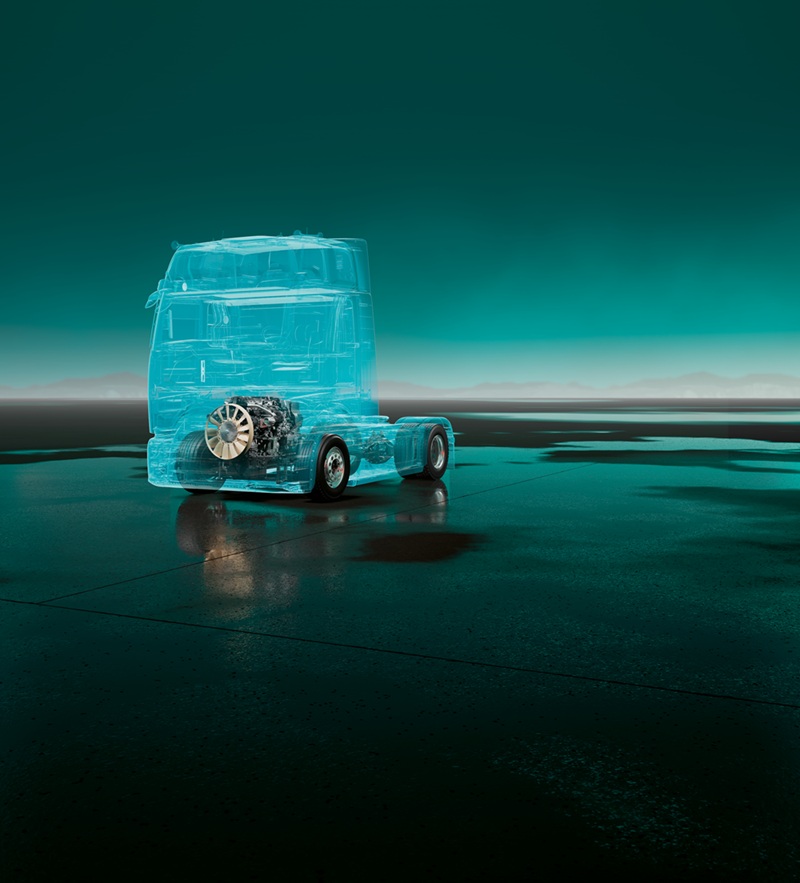
- Daimler Truck Powerliner cuts fuel use 4%.
- OM 471 delivers up to 550 hp.
- Coach updates target up to 6% savings.
Powerliner Drivetrain Targets Lower Fuel Consumption
Daimler Truck Powerliner debuted at IAA Transportation 2026 on September 13 as part of a broader presentation of transport technologies covering diesel efficiency, safety, digital services, connectivity, and autonomous driving. Daimler Truck positioned the new drivetrain as an integrated system that combines the engine, transmission, axles, and related components. The optimized configuration can reduce fuel consumption by up to 4% compared with the previous generation. Mercedes-Benz Trucks is using the technology to improve operating efficiency while retaining strong low-speed performance for demanding distribution, long-haul, and heavy-duty applications.
Upgraded OM 470 and OM 471 Engines
The new powertrain uses upgraded OM 470 and OM 471 diesel engines with changes designed to improve combustion and reduce friction. New injection systems, specially developed turbochargers, and an optimized oil circuit contribute to the efficiency gains, while the engines are engineered to deliver strong power at low engine speeds. Production of both engines is planned at the Mannheim plant in Germany, with introduction across all Actros and Arocs models scheduled from April 2027. This rollout makes the drivetrain a significant component of Mercedes-Benz Trucks' next product update.
Engine Outputs and Torque Ratings
OM 470 is aimed at heavy-duty distribution and payload-sensitive work, with outputs of 360, 408, and 455 hp and maximum torque ratings of 1,800, 2,000, or 2,200 Nm depending on the version. OM 471 targets long-haul and heavy-duty transport, offering 421, 449, 500, and 550 hp, with maximum torque ranging from 2,200 to 2,800 Nm. Both engines use downspeeding, which operates the engine at lower speeds to support lower fuel consumption and reduced noise. The powertrain is also approved for carbon dioxide-neutral EN 15940 XtL fuel.
Emissions Compliance and Future Requirements
The upgraded engines, exhaust system, controls, and operating strategies are designed to meet the Euro VIe emissions standard and are prepared for future Euro 7 requirements. This approach combines current emissions compliance with engineering provisions intended to support the next regulatory step. For fleet operators, the significance extends beyond engine output because fuel efficiency, emissions performance, and operating characteristics directly influence vehicle economics and deployment choices. The ability to use EN 15940 XtL fuel also gives the powertrain compatibility with a carbon dioxide-neutral fuel pathway identified in the product announcement.
Daimler Buses Adds the New Engines to Coaches
Daimler Buses is applying the OM 470 and OM 471 engines to a major coach product update, pairing them with new ZF EcoLife CoachLine and ZF TraXon 2 Coach transmissions. The company says the combination can deliver fuel savings of up to 6%. The ZF EcoLife CoachLine automatic transmission is planned for Mercedes-Benz Tourismo, while the ZF TraXon 2 Coach automated manual transmission is planned for Setra ComfortClass and TopClass models. TopoDyn and Predictive Powertrain Control are among the technologies included in the updated transmission package.
New Electronics Architecture Enables Connected Functions
A new electronics architecture is being used to support advanced driver assistance systems, digital services, and stronger vehicle connectivity across the updated platforms. Over-the-air updates will allow software to be changed remotely, with the stated goal of reducing workshop visits and vehicle downtime. This architecture connects software functions more closely with vehicle operation and fleet support, giving operators a way to receive updates without relying on a conventional workshop visit for every software change. The announcement places digital functionality alongside powertrain efficiency as a central part of the product strategy.
Advanced Safety and Driver Assistance Systems
Mercedes-Benz Trucks also presented a broader package of safety and driver-support technologies at IAA Transportation 2026. The showcased systems include Active Sideguard Assist 3, Active Cross Traffic Assist, Active Drive Assist 2, Electronic Park Brake Control, and Active Power Steering 3. The Multimedia Cockpit Interactive adds a redesigned driver environment with a high-resolution display, touchscreen, and multifunction steering wheel. Together, these systems expand the vehicle's assistance, control, and human-machine interface capabilities while complementing the new electronics architecture and the company's wider push toward connected commercial vehicles.
Expanded Fleetboard and Digital Services
The digital-services portfolio is also expanding through the new Fleetboard product suite, My TruckPoint Store, integrated financial services, Vehicle Data, and enhanced TruckLive. These services broaden the focus from the truck itself to the wider operating ecosystem surrounding commercial fleets. By combining vehicle data, digital services, software updates, and financial functions, Daimler Truck is linking vehicle operation with fleet-management and ownership processes. The overall presentation therefore covered multiple layers of transport technology, from engines and transmissions to safety systems, connectivity, remote software support, and services intended for day-to-day fleet operations.
OM 470 and OM 471 Powertrain Specifications
The Powerliner drivetrain specifications highlight the different operating roles assigned to the two upgraded engines. OM 470 is configured for heavy-duty distribution and payload-sensitive applications, while OM 471 is positioned for long-haul and heavy-duty transport. Their respective horsepower and torque ranges provide different performance configurations within the same new-generation powertrain strategy. The figures also show how Mercedes-Benz Trucks is separating engine applications according to operating requirements rather than using one specification across every duty cycle. The following table summarizes the principal output and torque figures provided in the announcement.
| Engine | Primary Application | Power | Maximum Torque |
|---|---|---|---|
| OM 470 | Heavy-duty distribution and payload-sensitive applications | 360, 408, 455 hp | 1,800, 2,000, 2,200 Nm |
| OM 471 | Long-haul and heavy-duty transport | 421, 449, 500, 550 hp | 2,200–2,800 Nm |
IAA 2026 Signals Broader Commercial Vehicle Updates
The IAA Transportation 2026 announcements indicate that Daimler Truck and Daimler Buses are pursuing efficiency improvements through integrated powertrains while simultaneously expanding software, safety, and connectivity capabilities. For truck fleets, the potential fuel reduction and lower-speed operating strategy may affect operating costs, while the planned April 2027 introduction provides a defined timing point for Actros and Arocs customers. For coaches, the stated savings of up to 6% broaden the efficiency focus beyond trucks. The combination of emissions preparation, alternative-fuel approval, ADAS, over-the-air updates, and digital services suggests a product strategy built around incremental efficiency and broader vehicle-system integration.
Industry Impact & Outlook
Industry Impact & Outlook focuses on how the new product architecture could shape commercial-vehicle purchasing and fleet operations. The immediate relevance is strongest for European truck and coach operators evaluating fuel consumption, emissions compliance, uptime, safety, and digital fleet support. The planned 2027 rollout gives fleets time to assess the new specifications and operating economics before adoption decisions, while the inclusion of future Euro 7 preparation and EN 15940 XtL compatibility provides additional flexibility as requirements and fuel strategies evolve. Competitive pressure is likely to center on measurable efficiency, system integration, driver assistance, and the ability to reduce operating disruption.
Frequently Asked Questions
What is the Powerliner drivetrain?
The Powerliner drivetrain is an integrated commercial-vehicle powertrain combining the engine, transmission, axles, and related components to improve overall efficiency. The system uses upgraded OM 470 and OM 471 engines with revised injection systems, turbochargers, and oil-circuit optimization. Daimler Truck says the optimized configuration can reduce fuel consumption by up to 4% compared with the previous generation. The engines also use downspeeding to support lower fuel consumption and noise, meet Euro VIe requirements, prepare for future Euro 7 requirements, and support carbon dioxide-neutral EN 15940 XtL fuel.
When will the new engines enter Mercedes-Benz Trucks models?
The upgraded engines are scheduled to enter all Actros and Arocs models from April 2027 as part of the planned product rollout. Both engines will be produced at the Mannheim plant in Germany and are intended for different operating requirements. OM 470 is designed for heavy-duty distribution and payload-sensitive applications, while OM 471 targets long-haul and heavy-duty transport. The rollout therefore gives customers access to different power and torque configurations while introducing the broader efficiency, emissions, and operating improvements associated with the new-generation powertrain.
Click above to visit the official source.
Discussion
Join the conversation.