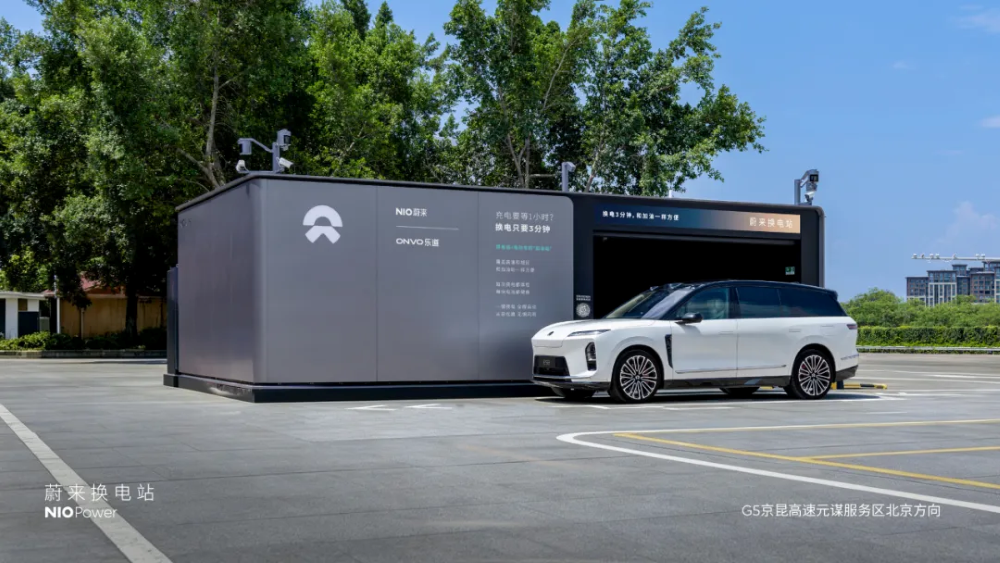
- NIO battery swapping stations expand highway coverage.
- New stations operate at key Yunnan service areas.
- NIO's network reaches 9,328 charging and swapping stations.
On September 8, NIO Inc. announced that a new batch of NIO battery swapping stations jointly built with Yunnan Communications Investment & Construction Group Co., Ltd. has officially entered full operation. The development follows the launch of the first batch of highway battery swapping stations jointly developed by NIO Energy Investment (Hubei) Co., Ltd., also known as NIO Power, and Yunnan Communications Investment & Construction Group Co., Ltd. in 2024. The latest expansion strengthens battery swapping infrastructure along important expressway routes in Yunnan and continues the two parties' broader effort to support new energy mobility infrastructure across the province.
NIO Expands Highway Battery Swapping Coverage in Yunnan
The newly operational stations are located at key expressway service areas managed by Yunnan Communications Investment & Construction Group Co., Ltd. and are positioned along several major transportation corridors in Yunnan. Their deployment provides battery swapping services in both directions along key expressway routes, improving the availability of NIO's swapping infrastructure for eligible vehicles traveling through the province. The locations build on the cooperation established through the earlier 2024 station rollout and extend coverage across strategically important highway service areas rather than limiting battery swapping access to individual urban markets.
Highway Energy Infrastructure Development Continues
NIO and its partner plan to continue working on several areas of energy infrastructure development in Yunnan. Their future focus includes upgrading integrated energy networks along expressways, developing zero-carbon service areas, and deploying smart energy applications. These initiatives are intended to further improve infrastructure supporting new energy mobility in the province. The continued cooperation also indicates that the highway battery swapping network is being developed as part of a broader energy-infrastructure strategy, connecting expressway service areas with additional applications that can support the evolving requirements of new energy transportation.
NIO Nationwide Charging and Battery Swapping Network
As of September 8, NIO had built a nationwide network of 9,328 charging and battery swapping stations. The network consisted of 4,075 battery swapping stations and 5,253 charging stations, supported by a total of 30,284 chargers. These figures provide the broader context for the Yunnan expansion, showing that the newly operational highway stations form part of a substantially larger infrastructure network. The addition of stations along major expressway corridors therefore contributes to NIO's existing nationwide charging and swapping footprint while extending infrastructure coverage into strategically important transportation routes.
NIO Power and YCIC Cooperation
The cooperation between NIO Energy Investment (Hubei) Co., Ltd., or NIO Power, and Yunnan Communications Investment & Construction Group Co., Ltd. is focused on expanding energy infrastructure along Yunnan's expressways. The first batch of jointly developed highway battery swapping stations was launched in 2024, followed by the latest group entering full operation on September 8. The progression from the initial deployment to another operational batch demonstrates continued implementation of the partnership's infrastructure plans. For NIO, the project adds highway-oriented swapping capacity, while for YCIC, it supports the development of new energy mobility infrastructure across expressway service areas under its management.
NIO's Nationwide Infrastructure Network as of September 8
NIO's infrastructure totals as of September 8 show the relative scale of its battery swapping and charging operations across the country. Battery swapping stations represented a substantial portion of the network, while charging stations and their associated chargers provided additional energy-access capacity. The Yunnan highway deployment is therefore an incremental expansion within an established national infrastructure base, with the new stations specifically strengthening coverage along major expressway corridors and supporting two-way travel across the targeted routes.
| NIO Infrastructure Category | Network Total |
|---|---|
| Battery Swapping Stations | 4,075 |
| Charging Stations | 5,253 |
| Total Charging and Battery Swapping Stations | 9,328 |
| Chargers | 30,284 |
Industry Impact & Outlook
The Yunnan expansion strengthens highway-oriented energy infrastructure for NIO vehicles and could make long-distance travel across key expressway corridors more practical where the newly operational stations provide coverage. From a competitive perspective, the project highlights the importance of strategically located energy infrastructure alongside vehicle technology itself, particularly in regions where major transportation corridors connect multiple service areas. The continued cooperation between NIO Power and YCIC also provides a framework for additional infrastructure development in Yunnan, with integrated energy networks, zero-carbon service areas, and smart energy applications identified as future priorities. The immediate significance is the broader availability of battery swapping services across important routes.
Frequently Asked Questions
What is the latest development in NIO's Yunnan battery swapping network?
The latest development is the full operation of a new batch of highway battery swapping stations jointly built by NIO Power and YCIC in Yunnan. The stations are located at key expressway service areas managed by YCIC and cover major transportation corridors in both directions. The expansion follows an earlier batch launched in 2024 and supports NIO's continuing infrastructure development in the province. As of September 8, NIO had 4,075 battery swapping stations and 5,253 charging stations nationwide, totaling 9,328 charging and battery swapping stations with 30,284 chargers.
Click above to visit the official source.
Discussion
Join the conversation.