- Aumovio distributed brake system secures first series order.
- Production is scheduled to start in late 2027.
- The system supports automated driving up to SAE Level 5.
Aumovio Secures First Series Order for Distributed Brake System
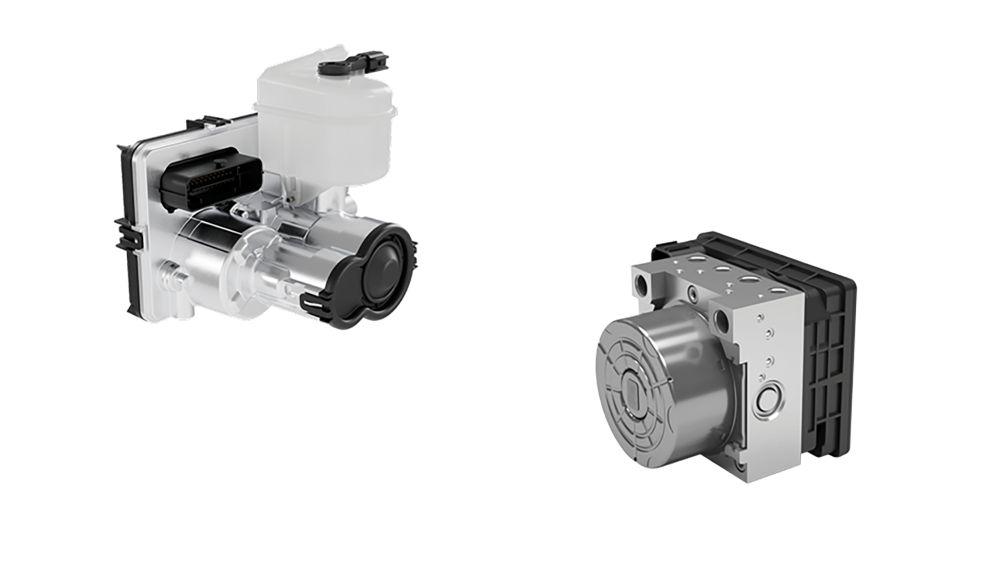
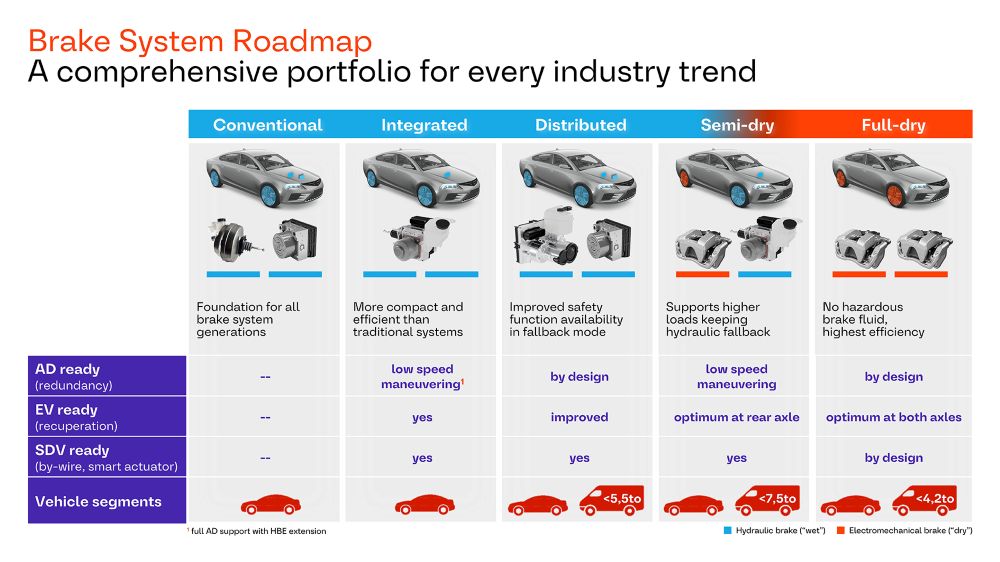
Aumovio SE has introduced a new distributed brake system, representing its latest generation of electrohydraulic braking technology. The company has secured its first series order from a major Chinese automaker, with production scheduled to begin at the end of 2027. The system combines an advanced one-box brake with an Electronic Stability Control (ESC) system and operates electronically from the brake pedal through to the fallback level. Its architecture is designed around modern electrical/electronic systems that provide multiple power supply points and redundant electrical networks, supporting a more compact design, lower weight, greater performance, and improved energy efficiency compared with earlier one-box braking systems.
Redundant Brake Actuators Support Fallback Operation
The distributed brake system keeps two brake actuators permanently active so they can jointly generate braking force when required. Its fallback capability allows braking to continue across all four wheels because each braking system is designed to operate independently. This arrangement provides the redundancy required for continued braking operation when a fallback mode is necessary. The system can be applied across various vehicle types and is also designed for automated driving applications extending up to SAE Level 5. Its electronic architecture therefore combines braking functionality, redundancy, and the requirements associated with increasingly automated vehicle operation within a single system concept.
Brake-by-Wire Architecture Reduces Vehicle Variants
The brake-by-wire architecture also allows a single e-pedal braking system to be used across different vehicle architectures, including both left-hand-drive and right-hand-drive vehicles. This flexibility can reduce the number of system variants that suppliers and automakers need to develop and support. By using a common braking approach across these configurations, the technology can lower development, manufacturing, and logistics costs for both sides of the automotive supply chain. The architecture therefore extends beyond braking performance by providing a standardized approach that can simplify implementation across vehicle programs with different driving-side requirements.
Series Production Targets Late 2027
The first series order gives the distributed brake system a defined path from technology development into vehicle production. The order comes from a major automaker in China, while series production is scheduled to start at the end of 2027. The combination of electronic control, permanently active brake actuators, independent braking capability, and redundant electrical networks is intended to support the system's broader vehicle applications. The production timeline also establishes a specific point at which the latest electrohydraulic brake generation is expected to move into series manufacturing, making the program an important commercial step for the technology.
Industry Impact & Outlook
The distributed brake system could influence automotive braking development by combining redundancy, electronic control, packaging advantages, and cross-architecture compatibility in one brake-by-wire solution. Its ability to support automated driving up to SAE Level 5 also connects the braking architecture with increasingly automated vehicle designs, while the use of a common e-pedal system for left- and right-hand-drive vehicles could help reduce program complexity. For suppliers and automakers, the potential reduction in development, manufacturing, and logistics variants may be particularly relevant as vehicle architectures diversify. The first series order in China provides a concrete commercial application, with production planned for the end of 2027.
Frequently Asked Questions
What is Aumovio's new distributed brake system?
The system is a new generation of electrohydraulic brakes that combines an advanced one-box brake with Electronic Stability Control and operates electronically through its fallback level. It uses two permanently active brake actuators and redundant electrical networks to maintain braking capability. Each braking system can function independently, allowing operation on all four wheels in fallback mode. The architecture can also support automated driving up to SAE Level 5 and enables a common e-pedal braking system for left- and right-hand-drive vehicle architectures.
Click above to visit the official source.
Discussion
Join the conversation.