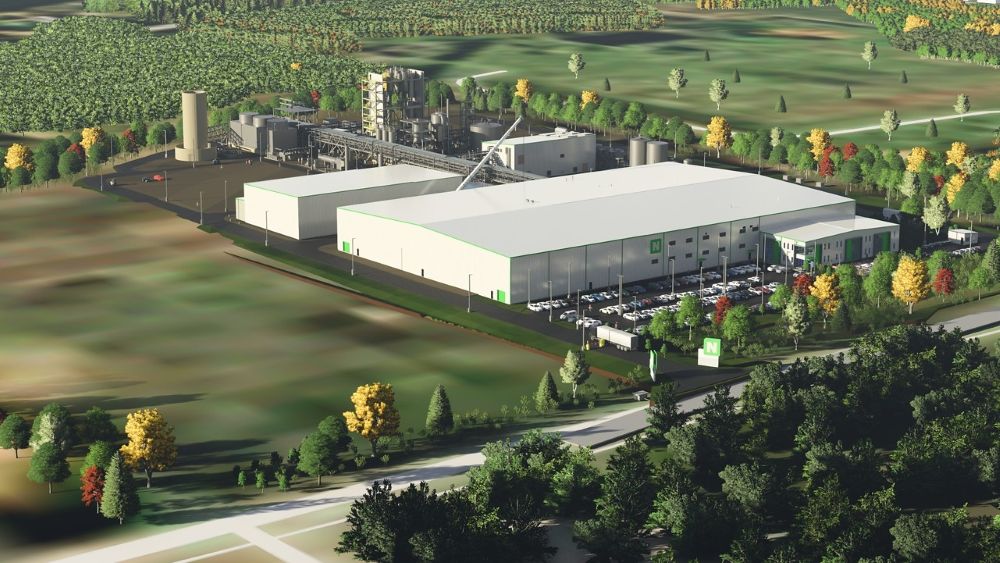
- Sartell manufacturing facility reaches major construction milestone.
- Plant will produce up to 1,500 tons annually.
- Honda investment supports rare-earth-free magnet commercialization.
On September 10, the Niron Magnetics project in Sartell, Minnesota, reached a significant construction milestone with the structural steel raising at its new manufacturing facility. The event represents the first commercial-scale step in the company’s staged manufacturing platform for high-performance rare-earth-free permanent magnets. The development moves the project beyond earlier construction phases and provides a visible indication of progress toward commercial operations. The facility is designed to support the company’s efforts to scale its magnet technology while establishing dedicated manufacturing capacity in Minnesota. The milestone also comes as the company advances commercialization efforts with support from strategic investment.
Sartell Plant Reaches Structural Steel Milestone
The structural steel raising marks a major stage in construction of the planned Sartell plant, which covers 287,000 square feet. The facility is scheduled to become operational in 2027, establishing a new manufacturing base for high-performance rare-earth-free permanent magnets. According to the company, the construction milestone is the first commercial-scale step of its staged manufacturing platform. The scale of the project indicates that the facility is being developed to move magnet production toward larger-volume manufacturing rather than remaining limited to smaller-scale operations. Its location in Sartell also positions the production program within Minnesota as the company prepares for the next stages of facility development and eventual operations.
Production Capacity and Employment Plans
At full operations, the Sartell facility is expected to have annual production capacity of up to 1,500 tons and employ 175 full-time workers. These planned figures provide a measure of the manufacturing scale targeted by the project once the plant is fully operational. The combination of dedicated production capacity and a permanent workforce is intended to support the commercialization of the rare-earth-free magnet technology at industrial scale. The facility therefore represents more than a construction project, as its eventual output and staffing levels are tied directly to the company’s broader effort to establish commercial manufacturing capabilities. The 2027 operational target remains the key upcoming milestone following the structural steel raising.
Honda Investment Supports Commercialization
The construction milestone follows a recent investment from Honda through Honda Xcelerator Ventures, the automaker’s global open innovation program. The investment is intended to support continued commercialization of the rare-earth-free permanent magnet technology. For the magnet developer, the funding adds strategic support as construction progresses toward the planned 2027 start of operations. Honda’s involvement also connects the technology development effort with an automotive manufacturer that has an interest in advanced technologies relevant to vehicle production. The investment does not change the announced capacity or operating timeline for the Minnesota facility, but it provides additional backing for the company’s ongoing commercialization program as the manufacturing platform advances.
Rare-Earth-Free Magnet Manufacturing Strategy
The manufacturing project centers on high-performance permanent magnets that do not rely on rare-earth materials. The technology is being commercialized through a staged manufacturing approach, with the Sartell facility serving as the first commercial-scale step identified by the company. The strategy is significant because permanent magnets are important components in multiple industrial applications, including automotive technologies, while the development of alternatives to rare-earth-dependent magnet materials can address material requirements within manufacturing supply chains. The new plant is intended to provide the physical production capability needed to move this technology from commercialization efforts toward higher-volume output. Its planned scale and 2027 operating date are therefore central to the company’s manufacturing roadmap.
Construction Progress Toward 2027 Operations
With structural steel now being raised, the project has reached a construction phase that establishes the framework for the 287,000-square-foot facility. The next stages will determine how the building progresses toward its planned operational status in 2027 and whether the stated production and employment targets can be reached as scheduled. The company’s recent investment activity provides additional commercial support while construction continues. For stakeholders following the project, the key indicators will be continued facility development, progress toward commissioning, and the eventual establishment of production capacity of up to 1,500 tons annually. The project’s progress will also provide a clearer indication of how quickly rare-earth-free permanent magnet manufacturing can be scaled commercially.
Industry Impact & Outlook
The Sartell project could strengthen the manufacturing base for rare-earth-free permanent magnets in the United States while giving the technology a defined path toward commercial-scale production. Its significance for the automotive sector is reinforced by Honda’s investment, although the announced development remains focused on commercialization and manufacturing capacity rather than a specific vehicle program. The planned 1,500-ton annual capacity and 175 full-time positions make the facility a meaningful industrial-scale undertaking, while the 2027 operating target establishes the next major benchmark. Continued construction and commercialization activity will determine how effectively the new plant can translate the magnet technology into sustained production and broader industrial adoption.
Frequently Asked Questions
What is the significance of the Sartell plant construction milestone?
The structural steel raising marks the first commercial-scale step in the company’s staged manufacturing platform for high-performance rare-earth-free permanent magnets. The 287,000-square-foot Minnesota facility is scheduled to become operational in 2027, with planned capacity of up to 1,500 tons annually and 175 full-time employees at full operations. A recent investment from Honda, made through Honda Xcelerator Ventures, is supporting continued commercialization of the magnet technology. The construction milestone therefore represents progress toward establishing commercial manufacturing capacity while the company continues developing its rare-earth-free permanent magnet business.
Click above to visit the official source.
Discussion
Join the conversation.