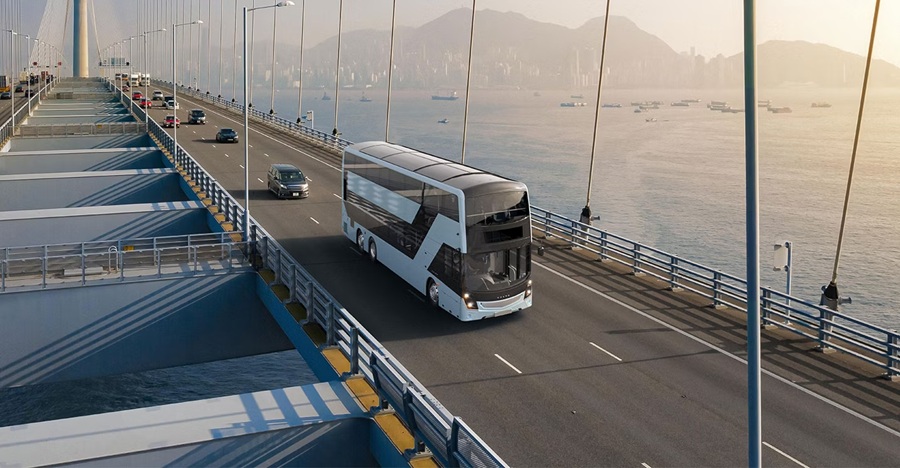
- Volvo BZL DD Electric debuts with tri-axle design.
- Battery capacity reaches up to 500 kWh.
- CCS charging supports up to 250 kW.
Volvo BZL DD Electric Debuts in Hong Kong
On September 10, Volvo Bus unveiled the Volvo BZL DD Electric at the ReThink exhibition in Hong Kong. The new double-decker is the first Volvo electric bus to use a 6x2 tri-axle configuration, combining Volvo’s electric chassis with double-decker bodywork developed with MCV. The vehicle expands Volvo’s electric bus portfolio into a configuration designed for high passenger capacity. Its debut in Hong Kong highlights the application of Volvo’s electric chassis technology in a large double-decker platform. The combination of the electric chassis and MCV-developed bodywork forms the basis of the new vehicle.
Dimensions and Electric Powertrain
The Volvo BZL DD Electric measures 12,000 mm in length, 2,550 mm in width, and 4,400 mm in height. Its propulsion system uses Volvo EPT802 dual electric motors paired with a Volvo 2-speed automated manual transmission. Together, the motors provide a maximum power output of 2x200 kW, while maximum wheel torque reaches 31,000 Nm. This powertrain configuration combines dual electric motors with a two-speed transmission within the tri-axle double-decker platform. The stated dimensions define the vehicle’s overall physical profile, while the electric propulsion system provides the specified power and wheel torque for the new bus.
Battery Capacity and Charging System
The electric double-decker is equipped with an LFP traction battery offering a capacity of up to 500 kWh. Charging is handled through a CCS system that supports charging power of up to 250 kW. The battery and charging specifications provide the key energy-storage and charging characteristics of the vehicle’s electric architecture. The 500 kWh maximum battery capacity is paired with the 250 kW maximum CCS charging capability specified for the bus. These systems form the core of its energy supply and charging configuration while complementing the electric powertrain used in the new double-decker platform.
Passenger Capacity and Double-Decker Configuration
The new Volvo Bus can accommodate up to 120 passengers, including 82 seated passengers. The passenger capacity reflects the role of the vehicle as a high-capacity double-decker electric bus, while the 6x2 tri-axle layout supports its overall configuration. The vehicle combines this passenger-carrying capability with Volvo’s electric chassis and bodywork developed with MCV. The stated seating figure accounts for 82 of the maximum 120 passengers, providing a clear breakdown of the vehicle’s passenger capacity. Together, these characteristics define the configuration presented at the ReThink exhibition.
Industry Impact & Outlook
The Volvo BZL DD Electric extends electric propulsion into a high-capacity double-decker format while introducing Volvo’s first electric bus with a 6x2 tri-axle configuration. Its 500 kWh LFP battery, 250 kW CCS charging capability, dual electric motors, and capacity for up to 120 passengers demonstrate how electric bus platforms can combine substantial passenger capacity with dedicated electric propulsion. The Hong Kong debut is particularly relevant to markets using double-decker buses, while the MCV bodywork partnership shows how Volvo’s electric chassis can be integrated with specialized body configurations. Further deployment decisions will depend on the requirements of operators and markets.
Frequently Asked Questions
What is the Volvo BZL DD Electric?
The Volvo BZL DD Electric is a double-decker electric bus unveiled by Volvo Bus at the ReThink exhibition in Hong Kong on September 10. It is the first Volvo electric bus to feature a 6x2 tri-axle configuration and combines Volvo’s electric chassis with double-decker bodywork developed with MCV. The bus uses dual Volvo EPT802 electric motors, a 2-speed automated manual transmission, and an LFP traction battery with capacity of up to 500 kWh. It can carry up to 120 passengers, including 82 seated passengers, and supports CCS charging at up to 250 kW.
Click above to visit the official source.
Discussion
Join the conversation.