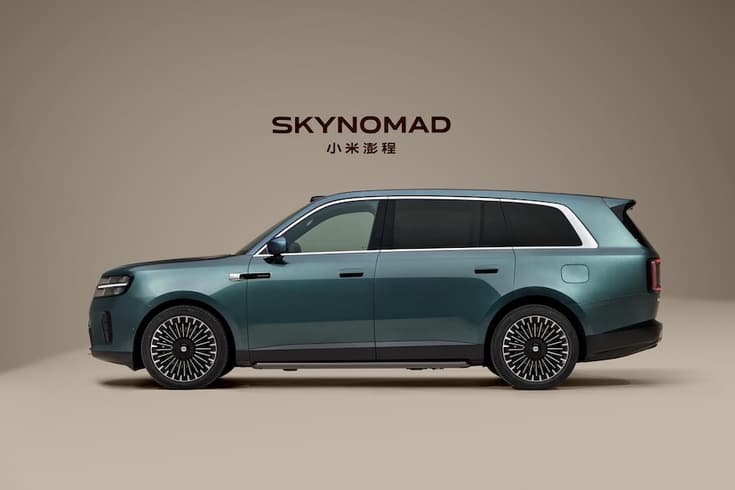
- Xiaomi SkyNomad SUV launches four EREV models.
- N90 Max reaches 1,705 km of aggregate range.
- N90 Max Studio adds pop-up roof and bed.
Xiaomi SkyNomad Series Introduces Four EREV SUVs
Xiaomi Auto has officially launched the Xiaomi SkyNomad SUV series, expanding its vehicle lineup with four extended-range electric vehicle configurations based on the company’s proprietary Kunlun technical architecture. The range spans the five-seat N70 and seven-seat N90 nameplates, with four trim levels consisting of the N70 Pro, N70 Max, N90 Max and N90 Max Studio. The new series combines battery-electric driving capability with extended aggregate range and multiple cabin configurations designed around passenger space and flexibility. Across the lineup, Xiaomi has also integrated advanced computing, sensing and driver assistance hardware, positioning the SkyNomad series around a combination of electric propulsion, long-distance usability and technology-focused interior features.
SkyNomad N70 Dimensions and Interior Flexibility
The N70 measures 4,960 mm long, 1,998 mm wide and has a 2,950 mm wheelbase, providing a cabin layout focused on flexible passenger accommodation. Its flat cabin floor covers 4.01 square meters and incorporates five sliding tracks extending up to 1.56 meters. The second-row seats can move forward and backward by as much as 600 mm, allowing occupants to adjust available passenger and cargo space according to their needs. Rear legroom can reach 1,410 mm, while luggage capacity ranges from 1,203 liters to 2,425 liters when the rear seats are folded. This configuration gives the five-seat model substantial interior adaptability while retaining a conventional SUV body layout.
N70 Pro and N70 Max Powertrain Specifications
The N70 is offered with different powertrain configurations depending on trim level. The N70 Pro uses front-wheel drive and a 52 kWh lithium iron phosphate battery, delivering a CLTC electric range of 351 km and an aggregate range of 1,351 km. It accelerates from 0 to 100 km/h in 7.9 seconds. The N70 Max upgrades to a dual-motor all-wheel-drive system paired with a 76 kWh ternary lithium battery, increasing its CLTC electric range to 505 km and aggregate range to 1,461 km. Its 0-to-100 km/h acceleration time is 5.5 seconds. Depleted-battery fuel consumption is rated at 5.7 liters per 100 km for the Pro and 6.1 liters per 100 km for the Max.
SkyNomad N90 Max Expands Range and Performance
The larger N90 Max measures 5,285 mm in length, 1,998 mm in width and rides on a 3,080 mm wheelbase. Its 2+2+3 seating arrangement expands the vehicle’s passenger-carrying capability compared with the five-seat N70. The N90 Max uses a dual-motor all-wheel-drive powertrain and a 76 kWh ternary lithium battery. Its CLTC electric range is rated at 464 km, while aggregate range reaches 1,705 km. The SUV accelerates from 0 to 100 km/h in 5.9 seconds and has a top speed of 190 km/h. Depleted-battery WLTC fuel consumption is listed at 6.26 liters per 100 km, combining extended-range capability with the performance characteristics of its dual-motor configuration.
N90 Max Studio Adds Loft and Sleeping Features
The N90 Max Studio serves as the flagship configuration of the series and introduces a distinctive set of features centered on additional usable space. Its electric pop-up roof module increases the vehicle’s total height to 2,294 mm and creates an upper loft area capable of supporting up to 200 kg. Inside the cabin, the second-row seats can electrically transform into an integrated bed measuring 1.87 meters by 1.24 meters, with the conversion completed within 30 seconds. The flagship variant also receives factory-fitted underfloor heating, wood-grain aluminum flooring and an integrated 30-inch projection screen. These additions give the N90 Max Studio a more multifunctional interior than the standard configurations.
Advanced Computing and Driver Assistance Hardware
Technology across the SkyNomad series is supported by a third-generation 4nm Qualcomm Snapdragon 8 platform operating with Xiaomi Super EEA architecture. The electronics package is complemented by driver assistance hardware that includes an Nvidia Thor-U computing chipset rated at 700 TOPS. This computing system works alongside LiDAR and 4D millimeter-wave radar to support the vehicle’s active safety and driver assistance functions. Xiaomi states that 25 active safety assistance systems are included as standard across the series. The combination of high-performance computing, multiple sensing technologies and standardized active safety functions gives the lineup a technology architecture that extends beyond its electric powertrain and into vehicle control and driver assistance.
Kunlun Architecture Underpins the New SUV Lineup
The four-model SkyNomad range uses Xiaomi Auto’s proprietary Kunlun technical architecture as the foundation for its extended-range electric vehicle configurations. The architecture supports multiple vehicle sizes and powertrain combinations within the same series, allowing the N70 and N90 to serve different passenger and performance requirements. The N70 focuses on a five-seat layout with flexible second-row movement and two distinct powertrain configurations, while the N90 provides a larger seven-seat arrangement and a higher aggregate range in the N90 Max. The N90 Max Studio further extends the platform’s functional scope with its pop-up roof, loft and convertible sleeping area, creating a broader range of use cases within the same vehicle family.
Model Range Covers Different Passenger and Performance Needs
The SkyNomad lineup separates its four configurations through seating capacity, battery specifications, drivetrain layouts, performance figures and cabin equipment. The N70 Pro provides front-wheel drive, a 52 kWh LFP battery and a 351 km CLTC electric range, while the N70 Max adds dual-motor all-wheel drive, a 76 kWh ternary lithium battery and a 505 km CLTC electric range. The N90 Max moves to a larger seven-seat body and delivers 1,705 km of aggregate range, while the N90 Max Studio builds on that configuration with specialized interior and roof equipment. Together, the four variants give Xiaomi Auto a broader product structure for customers prioritizing efficiency, performance, passenger capacity or multifunctional cabin space.
Industry Impact & Outlook
The SkyNomad launch strengthens Xiaomi Auto’s presence in the SUV segment by combining extended-range electric propulsion with multiple vehicle sizes and technology configurations within one product family. The N70 and N90 cover different passenger requirements, while the N90 Max Studio adds functionality that could broaden the appeal of extended-range SUVs beyond conventional transportation needs. The use of high-performance computing, LiDAR, 4D millimeter-wave radar and standard active safety systems also emphasizes the growing integration of software and sensing hardware into new vehicle launches. Xiaomi Auto’s next steps will determine how the four configurations perform in the market, but the breadth of the lineup gives the company multiple ways to compete across passenger, range and technology priorities.
Frequently Asked Questions
What is the Xiaomi SkyNomad SUV lineup?
The Xiaomi SkyNomad SUV lineup consists of four extended-range electric vehicle configurations built on Xiaomi Auto’s proprietary Kunlun technical architecture. The range includes the five-seat N70 Pro and N70 Max, along with the seven-seat N90 Max and N90 Max Studio. Depending on configuration, the vehicles use front-wheel drive or dual-motor all-wheel drive, with battery capacities of 52 kWh or 76 kWh. The lineup also includes advanced computing and driver assistance hardware, while the flagship N90 Max Studio adds a pop-up roof, loft area and electrically configurable sleeping space.
Click above to visit the official source.
Discussion
Join the conversation.