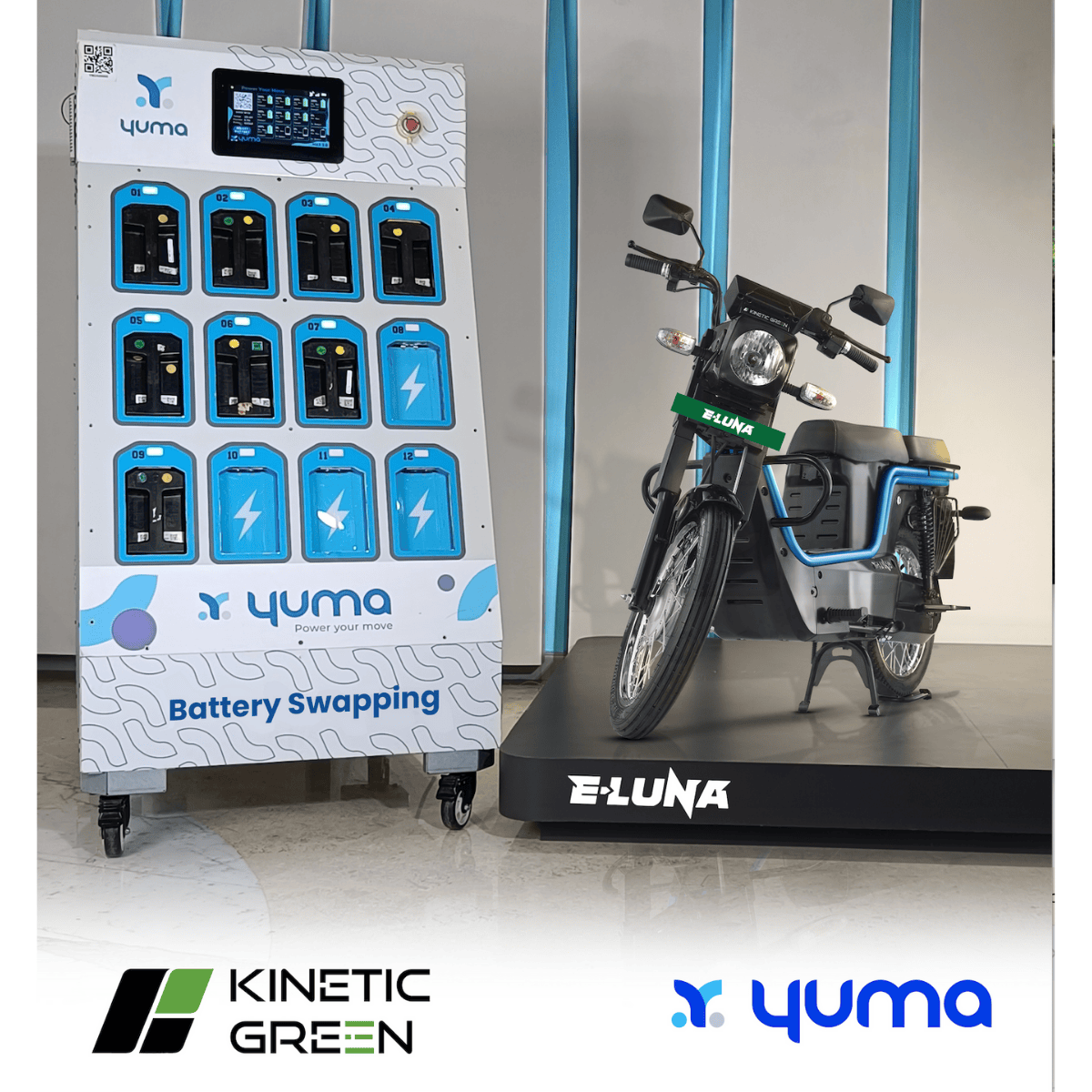
- Yuma achieved 50 million battery swaps with accelerated growth in the last 15 months
- Battery swapping is gaining strong adoption among fleet and last-mile delivery operators
India’s electric mobility ecosystem is witnessing rapid transformation as battery swapping gains momentum, particularly in high-usage vehicle segments. The Yuma battery swapping milestone India reflects this shift, with the company announcing the completion of 50 million swaps since launching operations in early 2023. This achievement highlights the increasing dependence of fleet operators on fast and reliable energy solutions to maintain operational efficiency and minimize downtime in daily logistics activities.
Rapid Growth in Battery Swapping Operations
The company’s expansion trajectory shows a sharp acceleration in adoption. While the first 25 million swaps took close to two years, the next 25 million were completed in just over a year. This faster pace indicates rising demand from commercial users who rely heavily on consistent vehicle availability. The growing usage also signals that energy infrastructure models tailored to operational efficiency are becoming central to electric mobility adoption across urban environments.
Battery Swapping Model Driving Fleet Efficiency
Battery swapping enables electric vehicle users to replace discharged batteries with fully charged units within minutes, eliminating long charging times. This model has gained strong traction in two- and three-wheeler segments, especially in delivery and logistics services where downtime directly affects income. Compared to conventional charging methods that may take extended periods, swapping ensures continuous vehicle operation, making it a practical solution for high-frequency usage scenarios.
Key Operational Advantages
The growing adoption of battery swapping can be attributed to several operational benefits that improve efficiency and reliability for fleet operators and service providers.
- Minimal downtime due to rapid battery exchange
- High network uptime ensuring consistent availability
- Compatibility with multiple vehicle platforms
- Reduced operational disruptions for logistics fleets
Infrastructure Expansion and Strategic Collaborations
The company has strengthened its network through collaborations with public and private stakeholders, enabling broader urban coverage and improved accessibility. These partnerships have contributed to denser infrastructure deployment, which is critical for supporting large-scale fleet operations. Although specific figures related to station count and geographic presence were not disclosed, the expansion strategy indicates a focus on scaling infrastructure in high-demand regions.
Policy Support and Market Positioning
Battery-as-a-service is increasingly recognized as a key enabler for reducing upfront electric vehicle costs by separating battery ownership from the vehicle itself. In markets like India, where battery costs represent a significant portion of total vehicle price, this model improves affordability and accelerates adoption. Government bodies have introduced frameworks encouraging standardized swappable batteries, while state-level policies provide incentives for infrastructure deployment, further strengthening the ecosystem.
Competitive Landscape and Industry Challenges
Despite strong policy backing, the battery swapping sector remains competitive with multiple players expanding their networks. A major industry challenge continues to be interoperability, where a single swap station must support batteries across different vehicle brands. Achieving standardization requires alignment between manufacturers, infrastructure providers, and regulatory bodies, making it both a technical and commercial hurdle that the industry is still addressing.
Future Outlook for Battery Swapping in India
Looking ahead, the focus remains on increasing network density, enhancing cross-platform compatibility, and maintaining high operational performance. The milestone achieved is not viewed as a final target but as a reflection of the growing scale of demand. As more fleet operators transition from conventional fuel vehicles to electric alternatives, battery swapping is expected to play a central role in enabling seamless and scalable energy access across India’s mobility landscape.
The continued evolution of this model will depend on infrastructure expansion, policy alignment, and technological standardization, all of which will shape the long-term growth of electric mobility in the country.
Click above to visit the official source.
Discussion
Join the conversation.